Showing posts with label Sensory. Show all posts

Tuesday, January 8, 2013

Ice Fishing

Looking for something different to fill your sensory tub with during a unit on Penguins or Winter Animals?  In this activity your little ones can pretend to be penguins and go "ice" fishing for thier food!  Just fill your sensory tub with packing peanuts (ice) and foam fish (penguin food) and encourage your little penguins to start fishing!

 Materials:  Sensory tub (or box), packing peanuts, foam sheets, tongs, scissors, sharpie
 Draw a fish shape on the upper left hand corner of a foam sheet. 
 Fold foam sheet in half.
 Fold in half one more time.
 Cut out fish shape.
 You should have four fish.  Cut out as many as you please.  Of course, the more children you have the more fish you should cut.
 You may also decorate them if you please.  If you want the search to be more difficult, cut fish out of white foam sheets.
 Hide the fish under the "ice".
 Make sure they are well hidden.
 Invite children to the center to go "ice fishing".  Provide each child with tongs. Using tongs is not only fun for them, it also strengthens their fine-motor skills.
 Children try finding fish using their tongs. You can give them a net or other container to set their fish in and then have them count how many fish they have found.
You can also program the fish with numbers, letters, or whatever you are practicing.
 If you have programmed fish with letters and numbers, children can categorize them accordingly and then put them in order.  Happy Fishing!!


Saturday, December 29, 2012

White as Snow

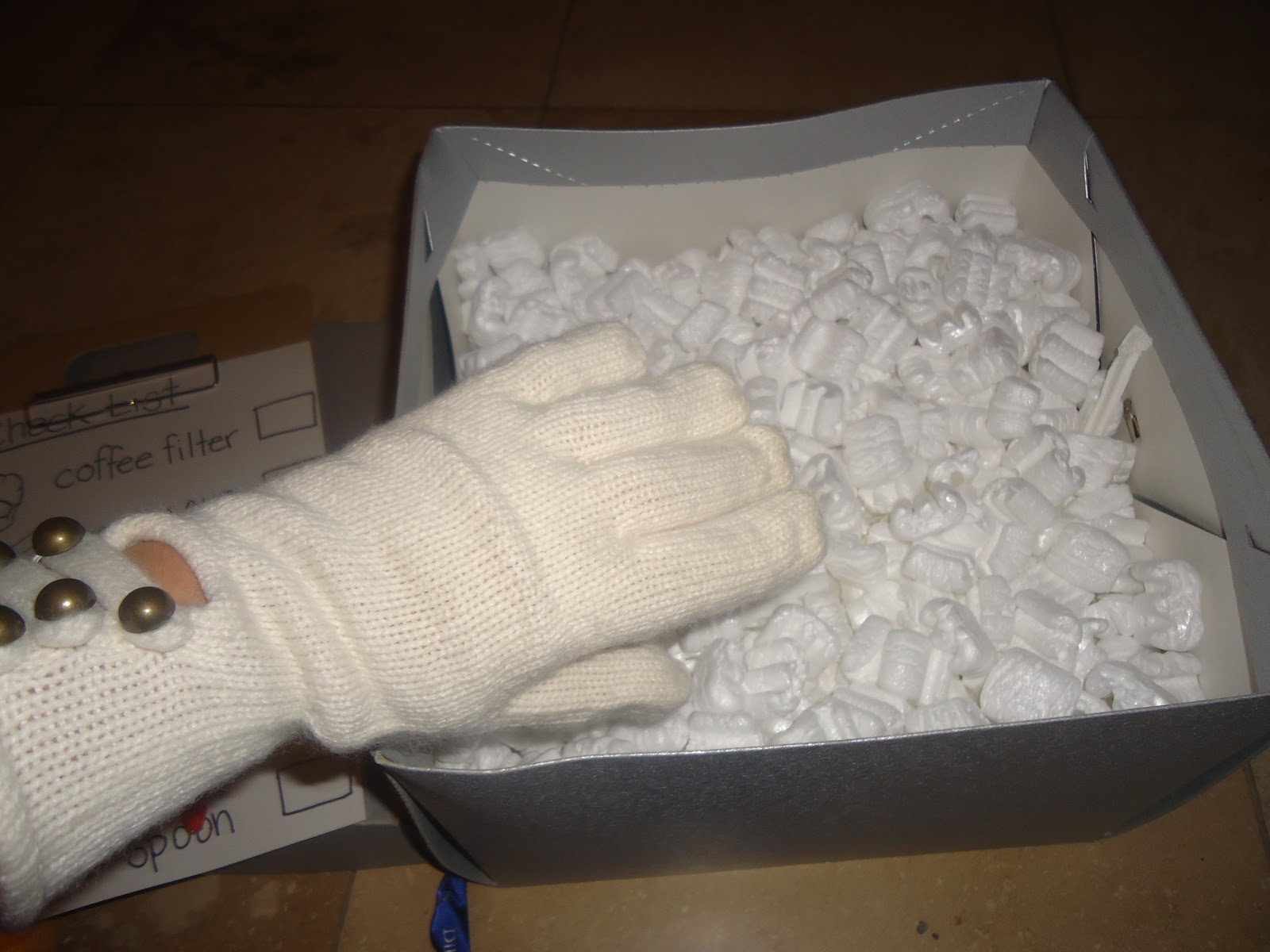
Let your little ones explore the color white with this sensory activity. Children dig through pretend snow to find white items that have been hidden.  For an added challenge, they may wear mittens to search through the "snow" and use a check list to mark off what they have found.


 Materials: Sensory tub, packing peanuts, small white items (coffee filter, napkin, straw, spatula, measuring spoons, measuring cups, cotton balls, etc.), mittens, pencil, white paper, clipboard


 Fill your sensory tub with packing peanuts to represent snow.  If you don't have a sensory tub, you may use a big box or tub like I did.

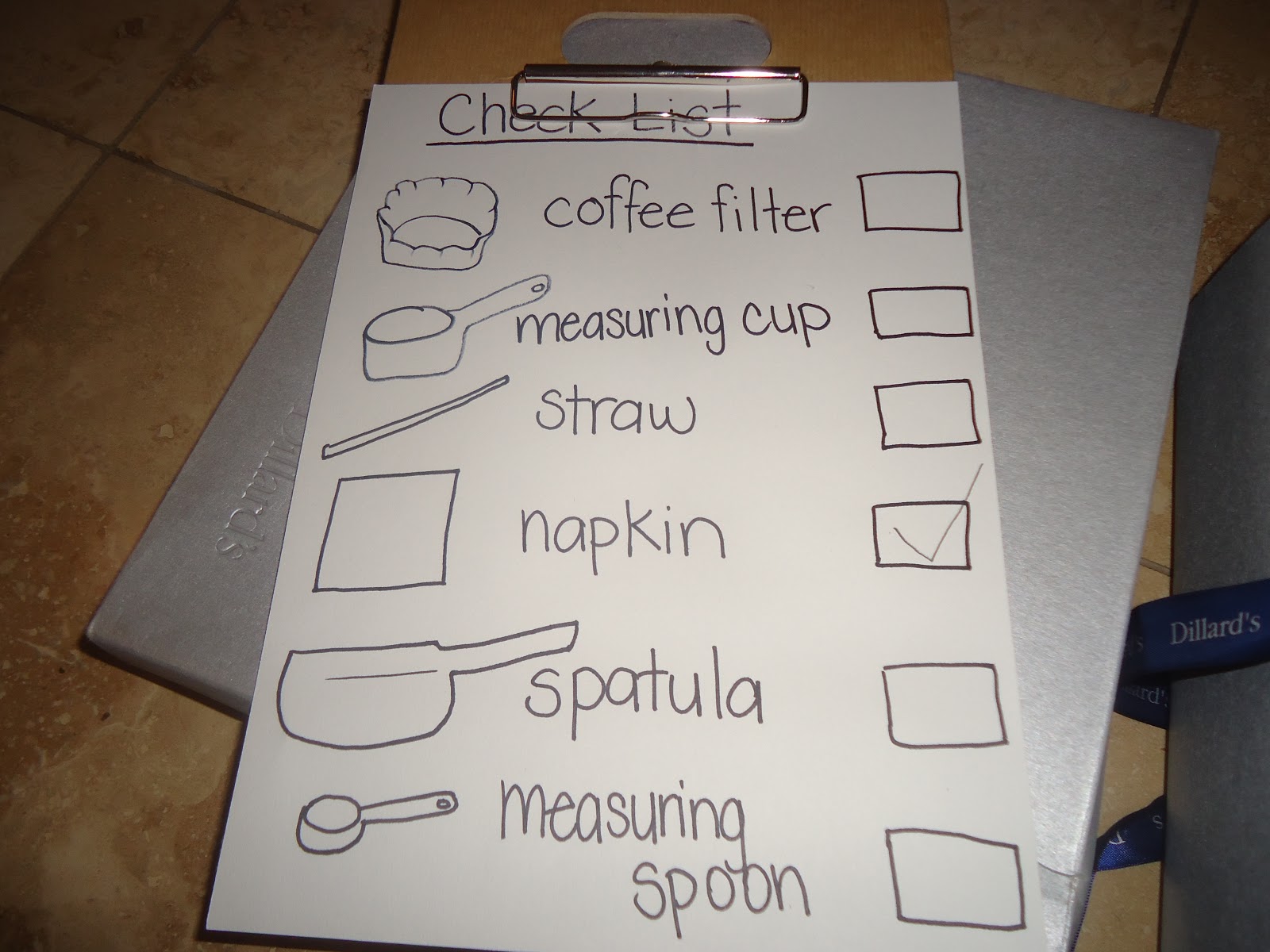
 On a piece of white paper, write a checklist of all the items you will hide in the "snow".
 Hide all the white items in the "snow".

 Let your child/ren wear their mittens and look for the items in the snow.  You may have a box or basket nearby for them to put the items they have found.

 Encourage them to find the item they found on the checklist and mark it off.  For younger children, make sure to use chubbier writing utensils. 
After they have found everything on their list, encourage them to count how many items they have found. Throughout the activity you will also be focusing on the color white. You may also introduce the word "camouflage".  Share with your child/ren that when something is camouflaged it is blending in with its surroundings.  The white items are hard to find because they are camouflaged; they blend in with the "snow" because the snow is the same color.

Friday, December 28, 2012

Snowshoe Hare

Make this snowshoe hare during a study on winter animals.  To camouflage, snowshoe hares turn brown in the summer and white in the winter.
   Materials: Cotton balls, rabbit stencil, glue, scissors, sharpie, white construction paper.
 If you right-click the picture above, you should be able to use it as a template.
Trace the rabbit pattern onto white construction paper, cut out, and draw details with a sharpie.

 Add glue all over the rabbit cut-out.
 Add cotton balls.  Cotton balls may be stretched out to take up more space.  The rabbit may also be made from brown construction paper to represent the rabbit in the summer and then covered in white to show how it changes to camouflage in the winter. 
Some children will cover the whole rabbit pattern with cotton balls, some will just put a few and some might even outline the rabbit with cotton balls.  Whatever they choose to do is acceptable.  Try to focus more on the process instead of the finished product. Let them do as much as they can on their own and ask questions throughout such as, "What do the cotton balls feel like? Why do you think these rabbits change colors in the different seasons?  Why would they turn white in the winter?"